Tree roots in Indianapolis sewer lines
Roots do not drill through sound pipe at random. They exploit joints, cracks, transitions, and other openings where moisture is available. Removing the mass restores access. The postcleaning camera shows whether the opening also needs structural work.
Also searched as: roots in sewer line Indianapolis, sewer root removal, tree root sewer repair, root killer sewer line
Use visual evidence to define the scope before choosing a method
These images show the two records that matter most: the local access route and the method-specific evidence needed to compare a repair scope.
Request a documented inspection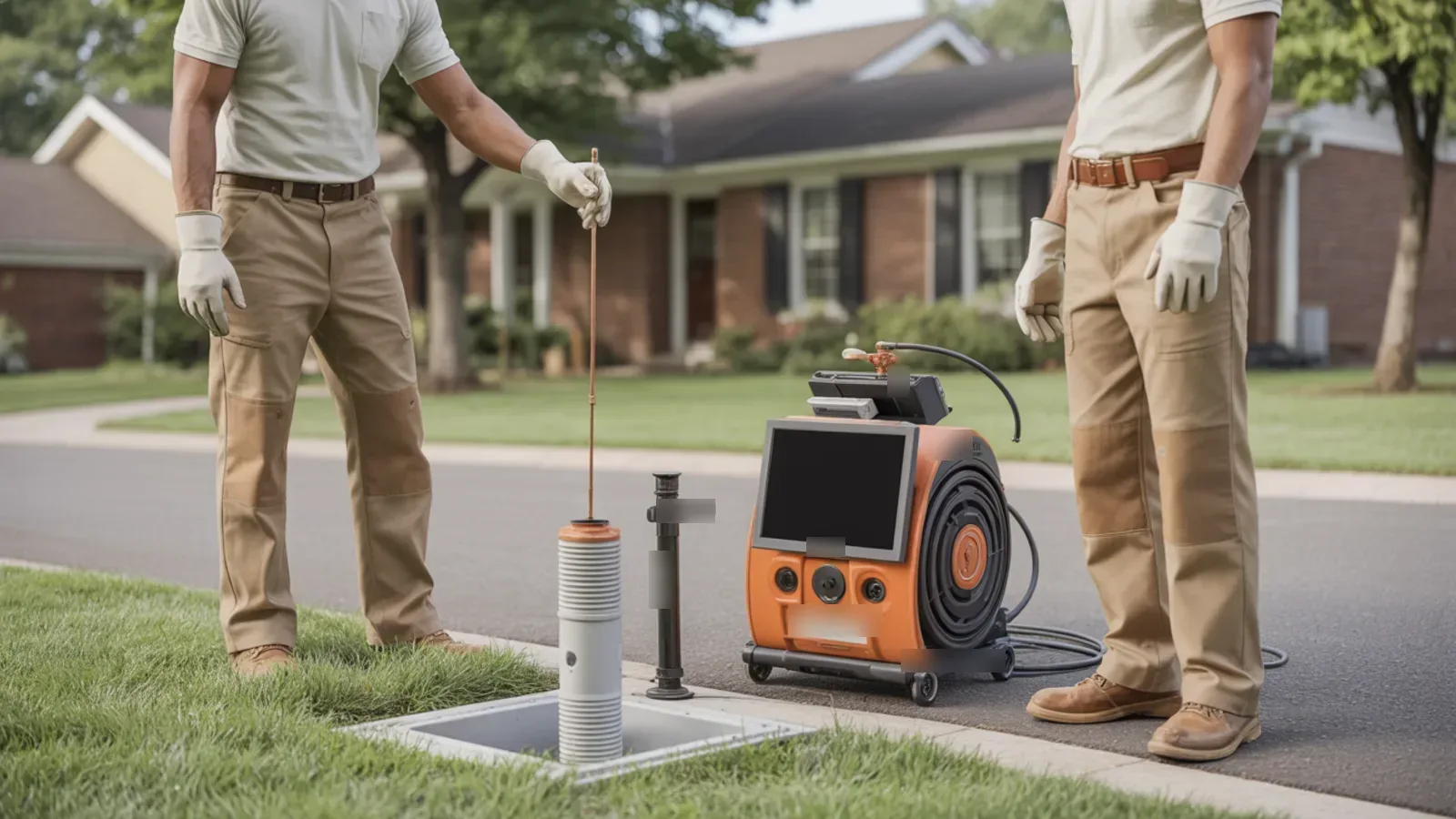
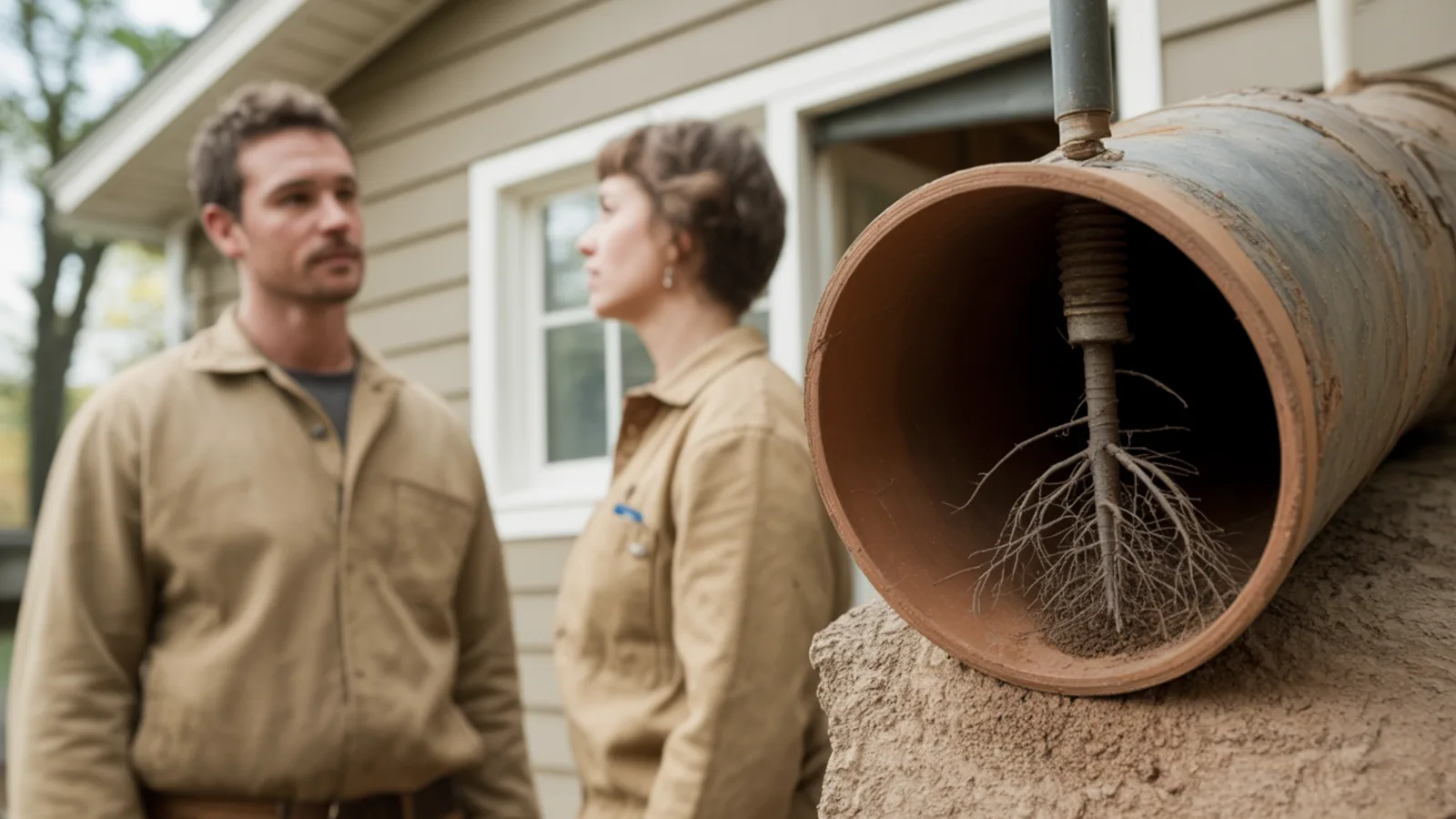
Find the entry point, not only the root ball
A precleaning video may show only a dense obstruction. After controlled cutting or jetting, the camera can document the joint, crack, or transition behind it. Distance and surface location matter when comparing a spot repair with a longer rehabilitation.
- Record precleaning obstruction
- Clean with a method appropriate to pipe condition
- Record exposed opening
- Locate defect at the surface
- Compare maintenance and structural options
Maintenance and repair are different promises
Periodic cutting can be a rational management choice for a serviceable line. A spot repair addresses one opening. Lining covers a defined continuous length. Replacement may be needed when roots accompany collapse or widespread deformation.
A chemical treatment can affect root growth. It does not reconstruct an offset joint or missing pipe.
Protect the tree and the sewer scope separately
A trench route can affect major roots while a trenchless method can reduce surface disturbance. That does not mean every trenchless proposal is technically suitable. Mark the pipe and important trees before choosing access points.
Related local guides
Questions homeowners ask before they approve work
Open a question to see the practical answer. Every answer shown here is also represented in the page’s FAQ structured data.
DiagnosisDo roots prove the pipe must be replaced?
No. The opening, material, severity, surrounding condition, and recurrence history determine whether maintenance, a spot repair, lining, or replacement makes sense.
TimelineWill roots grow back after cutting?
They can if the entry point remains. Recurrence varies, which is why postcleaning footage matters.
TrenchlessCan a liner stop roots?
A properly specified liner can isolate openings across the lined section, but the line must first qualify for the process.